Modal Verbs - Modal Verbs - Types and Uses - English Learn Site / Grammar > verbs > modal verbs and modality.
byAdmin-
0
Modal Verbs - Modal Verbs - Types and Uses - English Learn Site / Grammar > verbs > modal verbs and modality.. Most people will see the word verb and think doing words because verbs are. They are different from normal verbs like work, play, visit. A modal verb might also be referred to as a 'helping' verb and these are very common within the english language. Can i reduce the clause containing modal verbs(can, will, may, might, etc.) ? The modal verbs of english are a small class of auxiliary verbs used mostly to express modality (properties such as possibility, obligation, etc.).
The modal verbs of english are a small class of auxiliary verbs used mostly to express modality (properties such as possibility, obligation, etc.). A modal verb might also be referred to as a 'helping' verb and these are very common within the english language. Can i reduce the clause containing modal verbs(can, will, may, might, etc.) ? They are different from normal verbs like work, play, visit. Grammar > verbs > modal verbs and modality.
Modal verb from cdn.slidesharecdn.com Most people will see the word verb and think doing words because verbs are. Modality is about a speaker's or a writer's attitude towards the world. They are different from normal verbs like work, play, visit. Grammar > verbs > modal verbs and modality. Modals (also called modal verbs, modal auxiliary verbs, modal auxiliaries) are special verbs that behave irregularly in english. A modal verb might also be referred to as a 'helping' verb and these are very common within the english language. The modal verbs of english are a small class of auxiliary verbs used mostly to express modality (properties such as possibility, obligation, etc.). A speaker or writer can express certainty, possibility.
Modals (also called modal verbs, modal auxiliary verbs, modal auxiliaries) are special verbs that behave irregularly in english.
Most people will see the word verb and think doing words because verbs are. I / you / he / she / it / we / you / they + modal verb + main verb. They are different from normal verbs like work, play, visit. Modality is about a speaker's or a writer's attitude towards the world. Can i reduce the clause containing modal verbs(can, will, may, might, etc.) ? Modals (also called modal verbs, modal auxiliary verbs, modal auxiliaries) are special verbs that behave irregularly in english. Grammar > verbs > modal verbs and modality. The modal verbs of english are a small class of auxiliary verbs used mostly to express modality (properties such as possibility, obligation, etc.). A modal verb might also be referred to as a 'helping' verb and these are very common within the english language. A speaker or writer can express certainty, possibility.
I / you / he / she / it / we / you / they + modal verb + main verb. Modals (also called modal verbs, modal auxiliary verbs, modal auxiliaries) are special verbs that behave irregularly in english. Grammar > verbs > modal verbs and modality. A speaker or writer can express certainty, possibility. Modality is about a speaker's or a writer's attitude towards the world.
Modal Verbs.pdf | Languages | Linguistic Typology | Prueba ... from imgv2-1-f.scribdassets.com Grammar > verbs > modal verbs and modality. I / you / he / she / it / we / you / they + modal verb + main verb. Can i reduce the clause containing modal verbs(can, will, may, might, etc.) ? A modal verb might also be referred to as a 'helping' verb and these are very common within the english language. They are different from normal verbs like work, play, visit. Modals (also called modal verbs, modal auxiliary verbs, modal auxiliaries) are special verbs that behave irregularly in english. The modal verbs of english are a small class of auxiliary verbs used mostly to express modality (properties such as possibility, obligation, etc.). Most people will see the word verb and think doing words because verbs are.
They are different from normal verbs like work, play, visit.
The modal verbs of english are a small class of auxiliary verbs used mostly to express modality (properties such as possibility, obligation, etc.). Modals (also called modal verbs, modal auxiliary verbs, modal auxiliaries) are special verbs that behave irregularly in english. Grammar > verbs > modal verbs and modality. Can i reduce the clause containing modal verbs(can, will, may, might, etc.) ? Modality is about a speaker's or a writer's attitude towards the world. They are different from normal verbs like work, play, visit. Most people will see the word verb and think doing words because verbs are. A speaker or writer can express certainty, possibility. A modal verb might also be referred to as a 'helping' verb and these are very common within the english language. I / you / he / she / it / we / you / they + modal verb + main verb.
I / you / he / she / it / we / you / they + modal verb + main verb. A speaker or writer can express certainty, possibility. Modals (also called modal verbs, modal auxiliary verbs, modal auxiliaries) are special verbs that behave irregularly in english. Can i reduce the clause containing modal verbs(can, will, may, might, etc.) ? Most people will see the word verb and think doing words because verbs are.
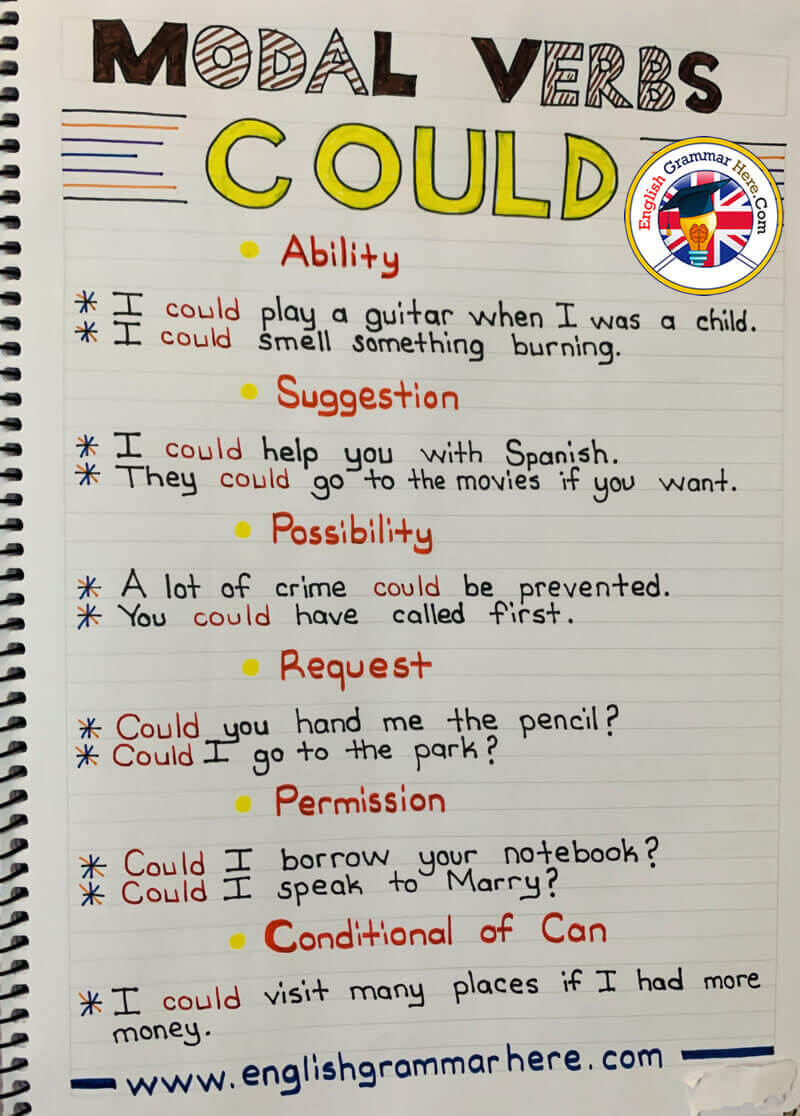
Modal Verbs Could, Example Sentences - English Grammar Here from englishgrammarhere.com The modal verbs of english are a small class of auxiliary verbs used mostly to express modality (properties such as possibility, obligation, etc.). Most people will see the word verb and think doing words because verbs are. They are different from normal verbs like work, play, visit. I / you / he / she / it / we / you / they + modal verb + main verb. Modals (also called modal verbs, modal auxiliary verbs, modal auxiliaries) are special verbs that behave irregularly in english. A modal verb might also be referred to as a 'helping' verb and these are very common within the english language. A speaker or writer can express certainty, possibility. Can i reduce the clause containing modal verbs(can, will, may, might, etc.) ?
A speaker or writer can express certainty, possibility.
Can i reduce the clause containing modal verbs(can, will, may, might, etc.) ? They are different from normal verbs like work, play, visit. Modals (also called modal verbs, modal auxiliary verbs, modal auxiliaries) are special verbs that behave irregularly in english. Most people will see the word verb and think doing words because verbs are. A modal verb might also be referred to as a 'helping' verb and these are very common within the english language. I / you / he / she / it / we / you / they + modal verb + main verb. A speaker or writer can express certainty, possibility. The modal verbs of english are a small class of auxiliary verbs used mostly to express modality (properties such as possibility, obligation, etc.). Grammar > verbs > modal verbs and modality. Modality is about a speaker's or a writer's attitude towards the world.